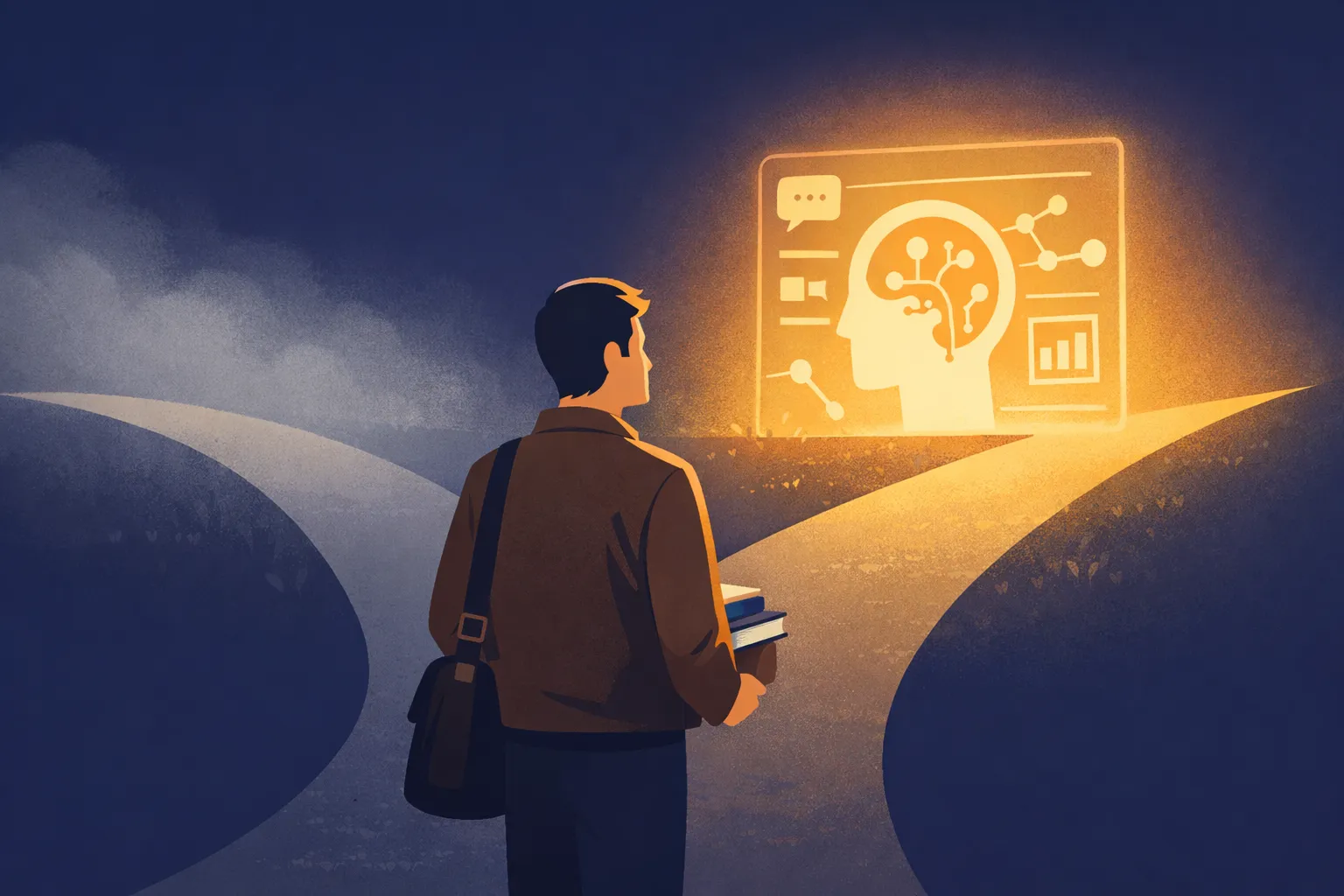
“Is AI, like, a big deal?”
A student asked me that during class. Honestly, I froze. I couldn’t tell if “big deal” meant “amazing” or “terrifying” — and neither could the student. They’d seen it on the news. Their parents were talking about it. Someone was shouting about it on YouTube. So they asked. That was probably all there was to it.
I think I mumbled something noncommittal. Something like, “Well, it depends on how you use it.” The kind of safe, generic answer that teachers give when they don’t actually know. Not my finest moment.
But this question has been echoing through classrooms, living rooms, and offices across Japan throughout 2025 and 2026. “What’s the deal with AI?” “Will it take our jobs?” “Should I make my kids learn about it?” The questions keep multiplying. Satisfying answers remain scarce.
I didn’t have answers either. So I decided to get my hands dirty.
Why Everything Got So Loud, So Fast
“AI is amazing.” “AI will change the world.” These phrases have been floating around for a decade. And for most of that time? They meant absolutely nothing to the average person.
What changed in the last year or two is deceptively simple: a machine appeared that takes plain language as input and gives plain language as output. That’s it. But that turned out to be everything.
The old “AI” was a toy for people who could code. Import a Python library, clean a dataset, train a model — and right there, 99% of people are already out. It was a tool built by engineers, for engineers. Not a world where normal people could just “try AI.”
Now it’s different. You talk to it in your own language, and it responds. “Summarize this document.” “Draft a reply to this email.” “Suggest a topic for my kid’s school project.” The input is a keyboard or a microphone. The output is text. What sits between them isn’t code or equations — it’s conversation.
(Here’s an irony worth noting: the very genre of “what is AI?” explainer articles is itself being mass-produced by AI. Search “what is AI” and you’ll find an infinite scroll of nearly identical posts. Information has multiplied. Understanding hasn’t.)
What a Teacher Saw After Building 4 Apps
I’m a high school teacher. Programming isn’t my specialty. I taught myself by having conversations with a tool called Claude Code, and I built four internal apps for my workplace. A PDF management tool, a lesson progress tracker, a travel expense system, and a seating chart randomizer. Then I went further and shipped a tarot fortune-telling app to Google Play for the general public.
“Anyone can easily build an app with AI.” That’s what they say. Here’s what actually happened.
It wasn’t easy at all.
AI isn’t a magic wand. A more accurate description: it’s like a brilliant but direction-dependent new hire. If you can’t clearly articulate what you want to build, you’ll get something that misses the mark entirely. “Make it nice” does not, in fact, produce something nice. You have to put your requirements into words, give feedback, iterate dozens of times, and only then does something usable emerge.
I actually laughed when a code review turned up 55 issues. I had AI review the code that AI had written, and out came timezone bugs, payment processing glitches, and security gaps — one after another. Verifying what AI produces is still, at the end of the day, a human job.
And yet — the speed of shaping something through conversation was something I could never have achieved alone. None of those four apps, nor the fortune-telling app, would exist without Claude Code. From requirements to design, implementation to debugging, I had a conversation partner at every step. That experience felt nothing like the surface-level “AI will steal our jobs” debate.
Beyond “It’s Useful, So I Use It”
AI is useful. If you’ve tried it even once, you probably won’t argue with that.
But honestly? I think most people are leaving a lot on the table.
What I see in my students is that for most of them, AI usage stops at “a better search engine.” A question comes up during group work — they ask AI immediately. Answer comes back. Problem solved. Next question. Ask again. Solved again.
That’s not a bad thing. The fact that they naturally reach for cutting-edge tools and use them fluently is impressive in its own right.
But it’s a bit like buying the latest iPhone and only using it for phone calls and messaging apps. The capability is there, but the usage isn’t keeping up. They’re barely scratching the surface.
Companies worldwide are pouring enormous resources into advancing this technology every single day. Using it only to “ask questions and get answers” feels like a waste.
If you’re going to use it anyway, using it for something creative is a lot more fun.
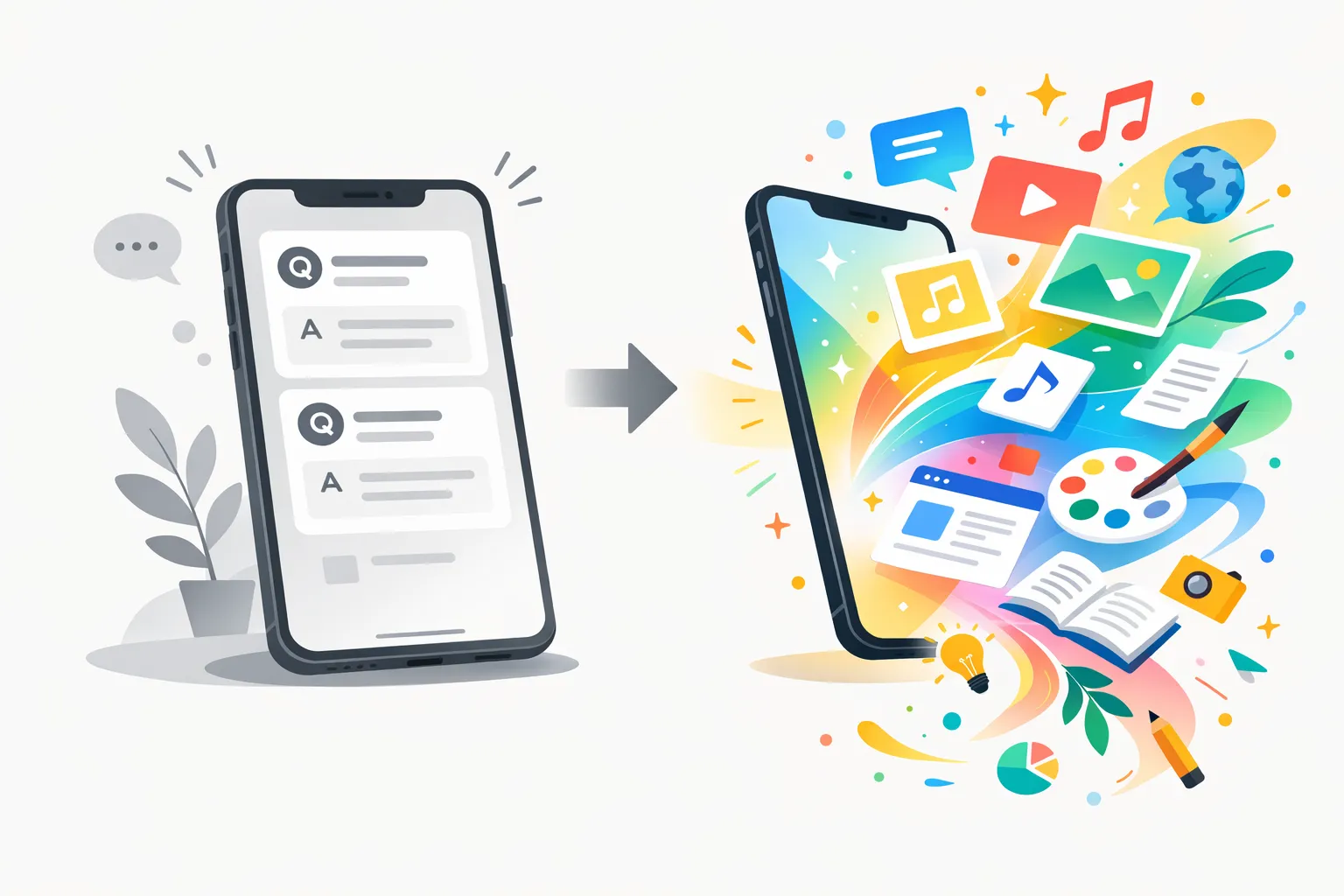
The reason I built four apps ultimately comes down to curiosity: “Can I actually make something with AI?” Not getting AI to solve my problems — building something together. That process was incomparably more enjoyable.
What If Most People Became Creators?
“AI lets anyone become a creator.” Say this, and the critics will come. “That’s not real creativity.” “Things made by AI have no value.” I get it. There might be downsides.
But I don’t think it’s a bad thing.
I built apps without programming expertise. I wrote an English version of this blog without being fluent in English. I designed a fortune-telling app’s visual identity without ever studying design. Domains that used to belong only to “people who can” are now open to “people who want to.”
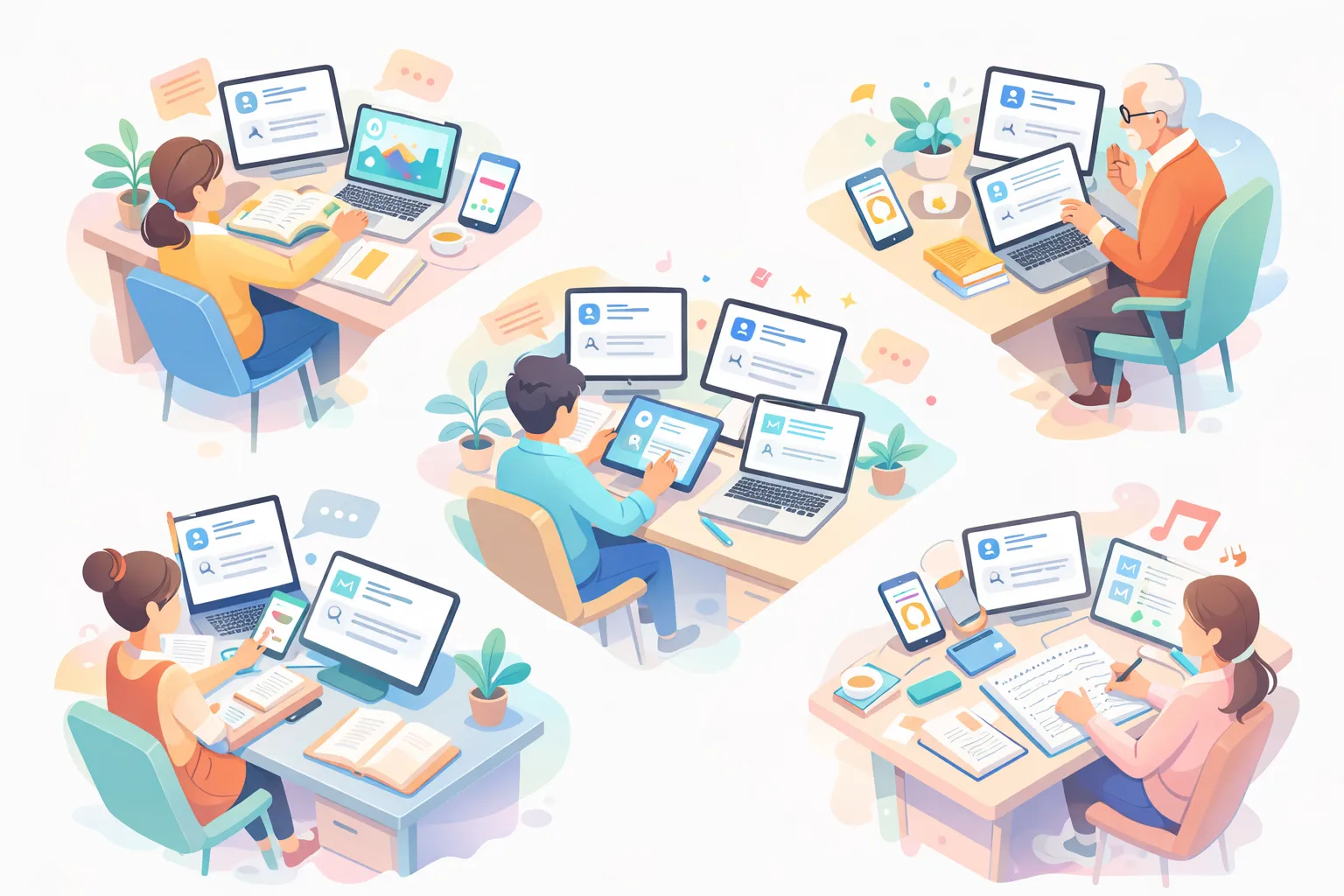
If the majority of people start using generative AI for creative work, nobody knows what will emerge from that. But I’m pretty sure it’ll be more interesting than “ask, get an answer, done.”
This many people are getting swept up in technological evolution all at once. Honestly? I find that exciting.
If that student asked me the same question today, I think I could give a slightly less terrible answer.
“Yeah, it’s a big deal. But just being scared is a waste. Try making something.”
See ya!